The Complete Guide to Pricing Your Handmade Goods
Pricing your handmade goods is one of the most crucial decisions you'll make as an artisan. Many makers struggle with this because it feels uncomfortable to put a monetary value on their creative work. However, proper pricing is essential for business sustainability and recognizing the true value of your craft.
The Cost-Plus Pricing Formula
The simplest approach to pricing is the cost-plus method. Calculate your total costs (materials, labor, overhead) and add a markup percentage. For handmade goods, a 2-4x markup over total costs is standard, depending on your market and product complexity.
Formula: (Material Cost + Labor Cost + Overhead) × Markup = Retail Price
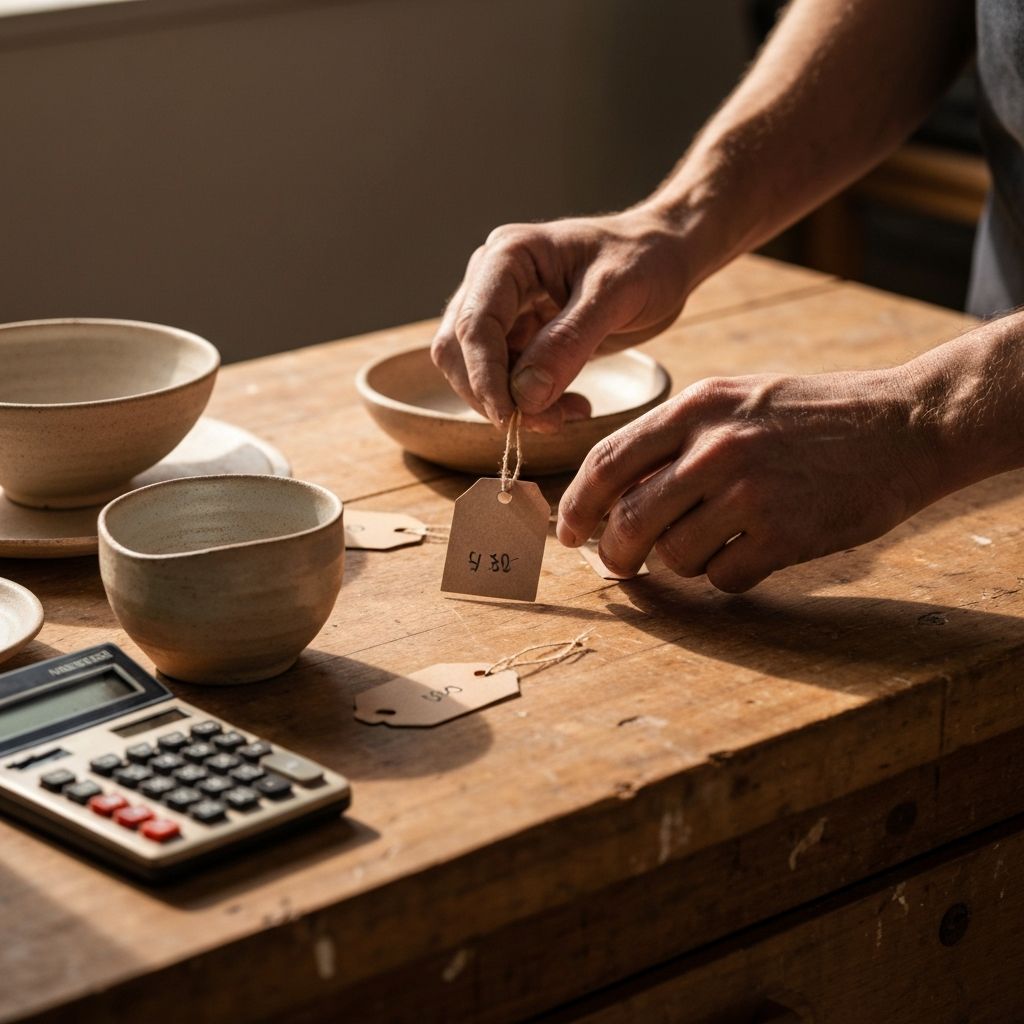
For example, if your handmade ceramic mug costs $5 in clay and glazes, takes 30 minutes to make and finish (at $20/hour labor = $10), and you allocate $2 for overhead, your total cost is $17. With a 3x markup, your retail price would be $51.
Understanding Your Time Value
Many makers underestimate their labor costs. Your time is valuable, and you deserve fair compensation. Consider:
- Active creation time (hands-on crafting)
- Passive time (drying, curing, firing)
- Administrative tasks (photos, social media, customer service)
- Learning and skill development time
Pro tip: Calculate an effective hourly rate by dividing your total monthly revenue by total monthly hours (including all activities). Most established makers aim for $25-$50+ per hour depending on market demand and product complexity.
Perceived Value vs. Cost
Don't get stuck on cost. High-quality, unique handmade items command premium prices. Customers pay for:
- Uniqueness and exclusivity
- Craftsmanship and quality
- Your brand story and values
- Convenience and accessibility
Research comparable products in your market. If similar handmade items sell for more, you might be underpricing. Use your positioning and unique selling points to justify your price point.
Testing Your Prices
Don't be afraid to test different price points. Start with your calculated cost-plus price, then monitor sales volume and customer feedback. If you're selling out quickly, you might be able to raise prices. If sales slow, you might be too high—or your marketing needs work.
Many successful makers use tiered pricing: entry-level products, mid-range popular items, and premium offerings. This caters to different customer budgets while maximizing revenue.
Seasonal and Market Adjustments
Don't keep your prices static year-round. Consider adjusting for:
- Seasonal demand (higher prices during gift-giving seasons)
- Materials costs fluctuations
- Market competition and trends
- Your growing expertise and demand
Review your pricing quarterly to ensure it still reflects your costs, market conditions, and business goals.
Final Thoughts
Remember: pricing is not set in stone. You can adjust, experiment, and evolve your strategy as your business grows. The key is to ensure you're covering costs, valuing your time, and building a sustainable business. Your craft deserves to be profitable.